AJ POWER · INDUSTRIAL MOTIVE POWER

LiFePO4 AGV battery packs.Built for industrial duty.

Custom AGV battery packs for warehouse AMRs, industrial tow tractors and utility equipment. AJ Power helps OEMs match power demand, charging windows and BMS communication to the vehicle.

Power
Continuous & peak current
Charging
Opportunity-charge strategy
Control
BMS & vehicle integration
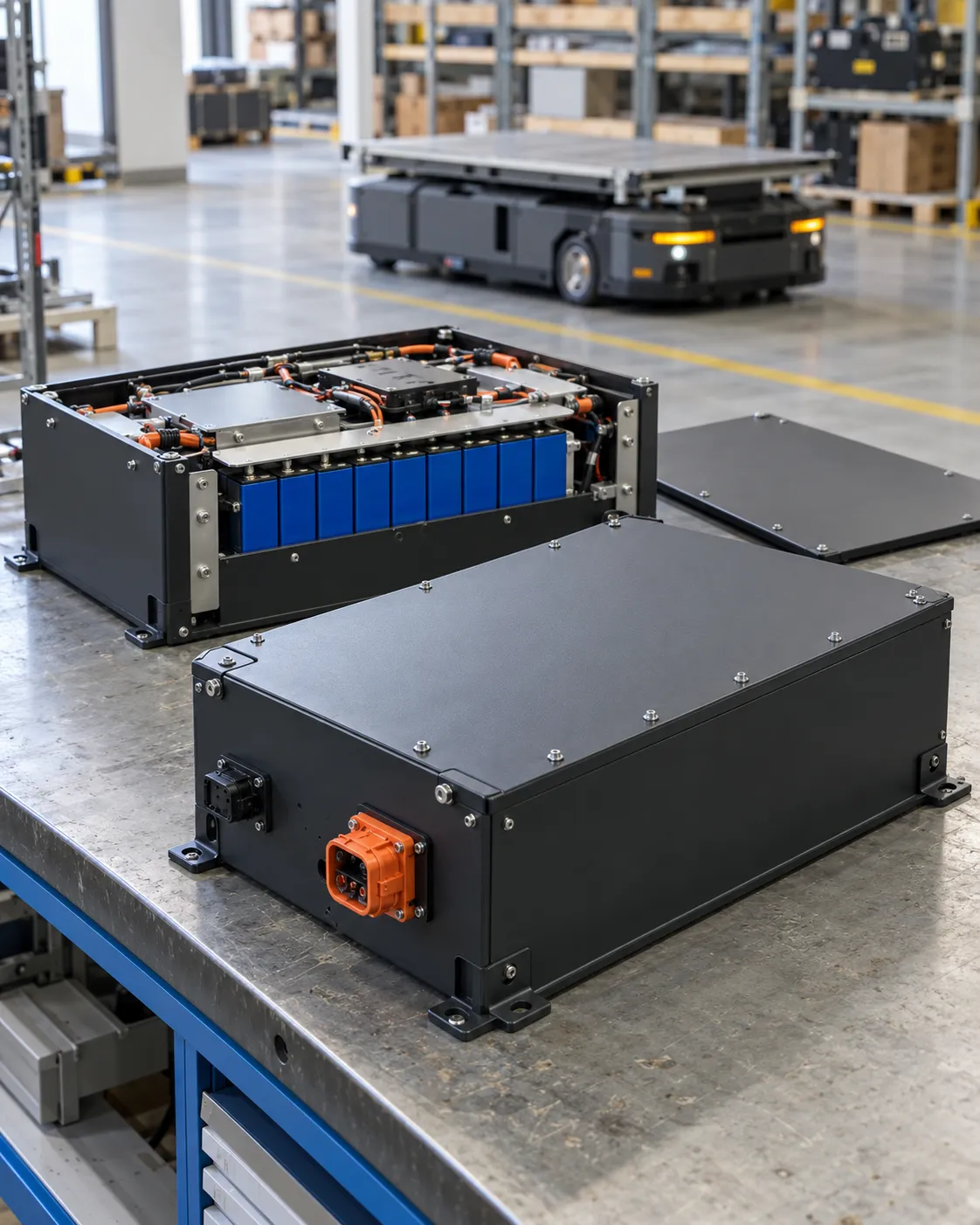
Industrial LiFePO4 AGV battery pack concepts with prismatic cells and a warehouse robot in the background
Industrial motive power · Concept visualization

01 / APPLICATIONS

AGV battery packs for industrial applications.

Start with the vehicle’s operating profile: traction peaks, auxiliary loads, available charging stops and the mechanical installation.

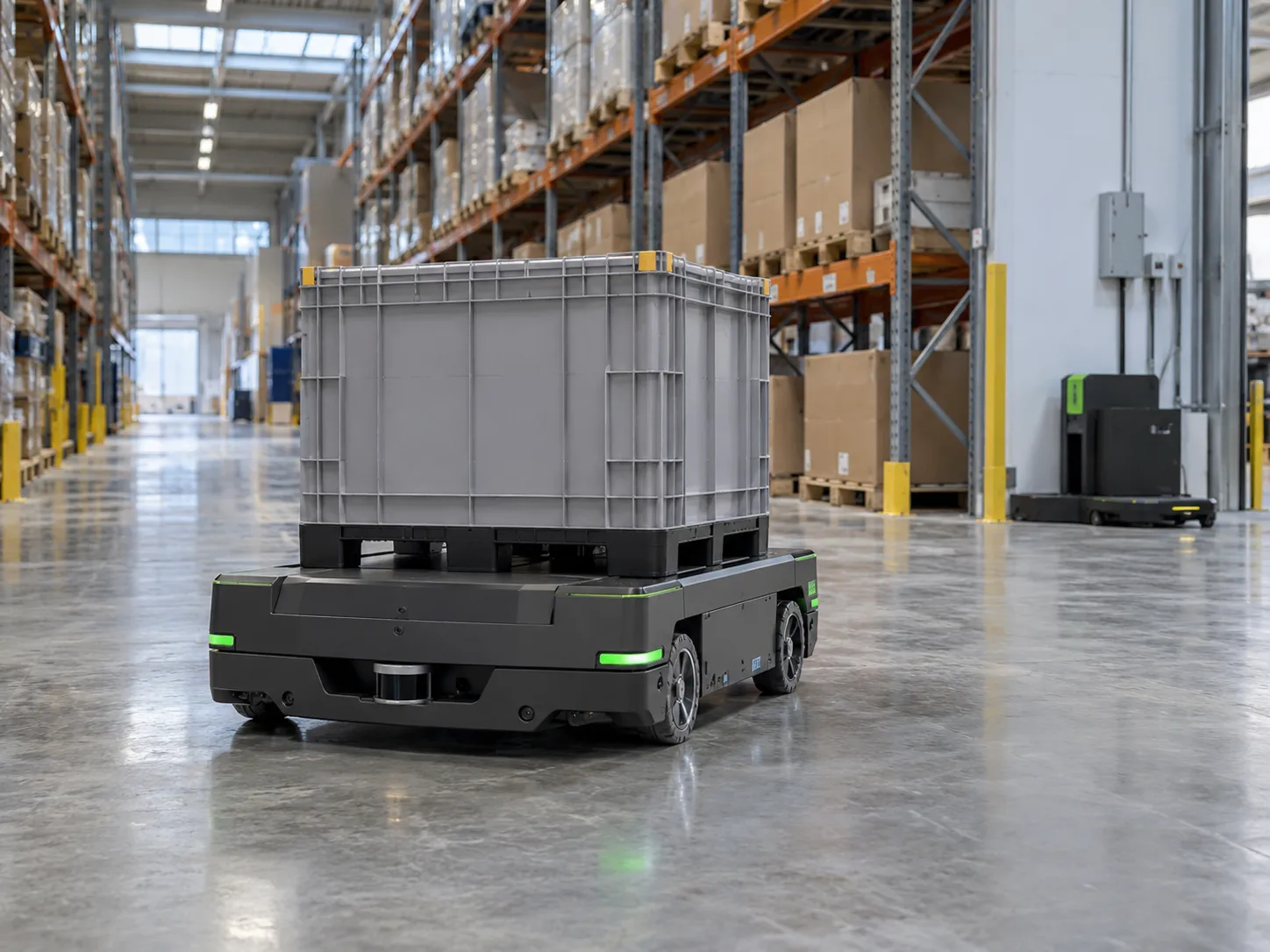
Warehouse AMR carrying an industrial tote in a logistics aisle, application concept

Warehouse AGVs & AMRs

Power for automated logistics.

Align the LiFePO4 AGV battery with the route, payload, shifts and charging dock so vehicle and battery can coordinate their operating states.

  • Capture traction, lifting and auxiliary current profiles.
  • Review dock contact limits, charge permission and departure interlocks.
  • Define controller messages, alarms and low-energy behavior.
Discuss an AGV or AMR project
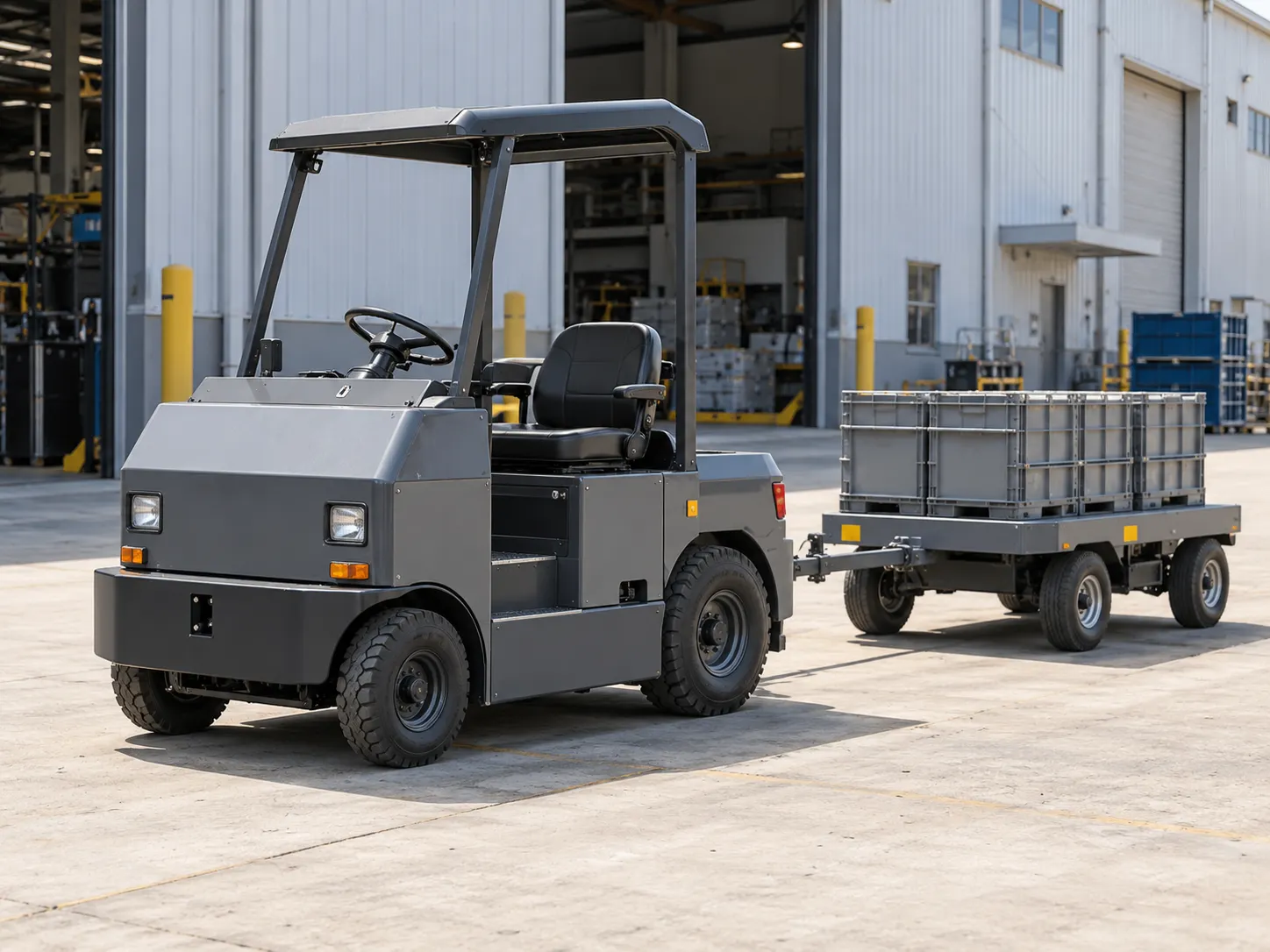
Electric industrial tow tractor with a material trailer in a factory yard, application concept

Industrial utility vehicles & retrofits

A battery that fits the vehicle.

Review tow tractors, utility carts and golf cart conversions as complete electrical and mechanical integrations, rather than a pack-only swap.

  • Check controller voltage and acceleration peaks.
  • Assess regenerative braking, charger compatibility and protection.
  • Confirm mounting, mass distribution and service access.
Discuss a utility vehicle project
Lowered electric scissor lift and ride-on floor scrubber in a maintenance bay, application concept

Scissor lifts & industrial floor scrubbers

Support a varied working day.

Match hydraulic pump starts, traction and cleaning loads to usable energy and the equipment’s actual charging routine.

  • Separate motor startup peaks from continuous loads.
  • Assess water, dust, vibration and cable routing.
  • Review machine interlocks and end-of-shift energy reserve.
Discuss utility equipment

AI-generated application concepts; not customer installation photographs.

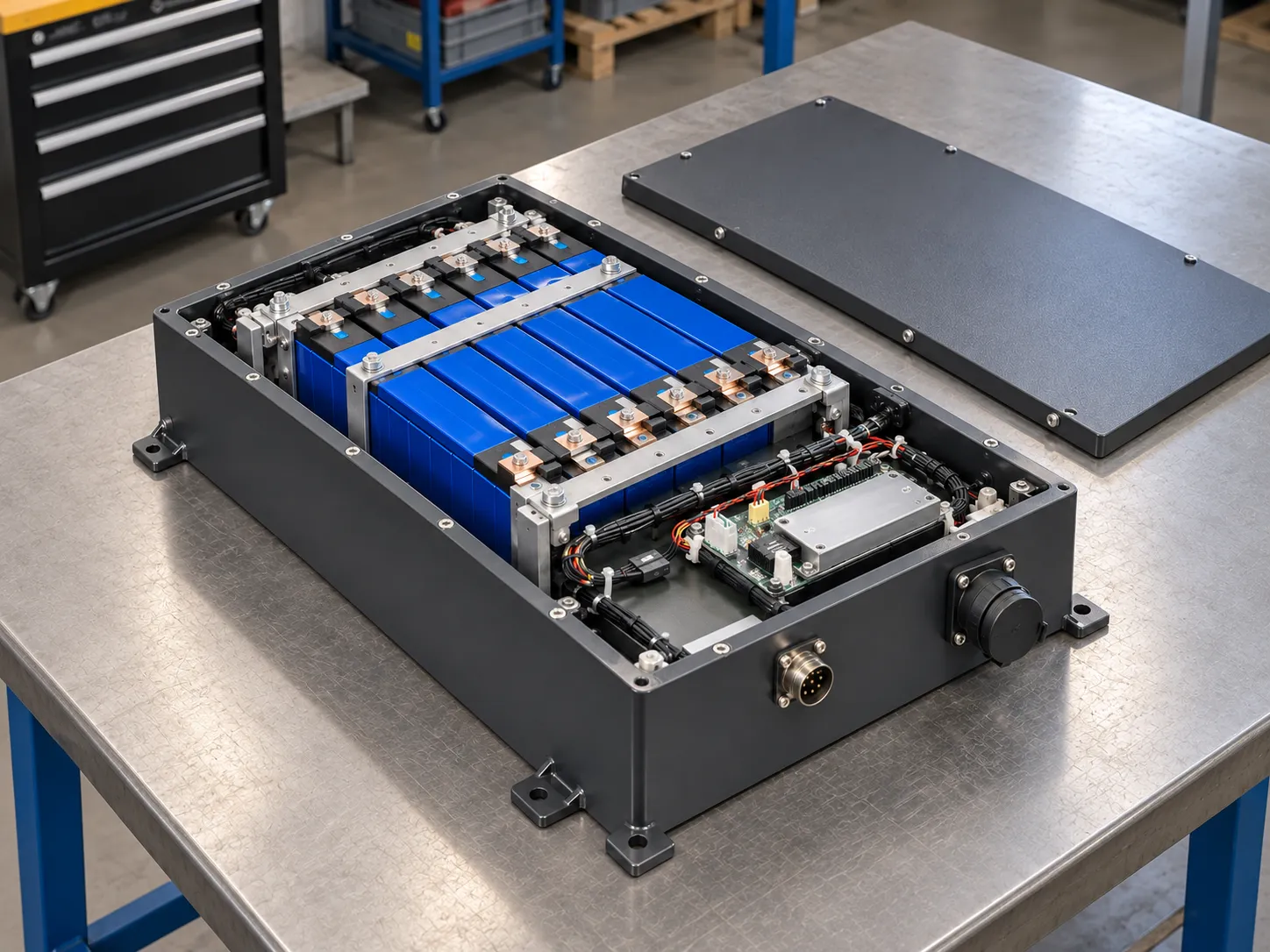
Opened industrial traction battery concept with prismatic cells, structural brackets and organized BMS wiring
PRISMATIC CELLS · STRUCTURAL RESTRAINT · BMS

02 / ENGINEERING

Power, structure and communication. One system.

A useful pack specification connects cell limits to the charger, motor controller and mechanical installation. Define the operating envelope before selecting components.

Current delivery & thermal management
Specify continuous current, peak amplitude, duration and repetition. Review cells, current paths, connectors, protection settings and cooling against that duty cycle. Include regenerative charge current.
Opportunity charging & fast-charge review
For a requested 1C–2C charge target, review cell approval, temperature window, starting SOC, charger output and cooling. Short charging stops also need reliable contact engagement and charge-enable coordination.
Structural restraint & joint quality
Review cell compression, mounts, strain relief and the vehicle’s measured vibration or shock profile. Select and validate the busbar joining process, including laser welding where appropriate, against cell design and production controls.
BMS & industrial bus integration
Agree CAN messages or a CANopen profile, or the application protocol over RS485. Define SOC, SOH, cell-voltage spread, fault codes, update intervals and timeout behavior. Confirm the signals available from the selected BMS.

Explore custom OEM battery design ↗

03 / SPECIFICATION REVIEW

Define the requirement. Verify the selected design.

Use these inputs to request a custom AGV pack specification. Current, charging and environmental ratings are model-specific.

Design itemWhat to defineHow it is confirmed
Discharge powerContinuous and peak current, peak duration, duty cycle and ambient temperature.Check cell and pack limits; verify voltage drop and temperature rise under the agreed load profile.
ChargingCharge-stop duration, SOC recovery and any 1C–2C target.A design target, not a universal rating. Confirm cell approval, BMS limits, charger and thermal conditions.
Mechanical fitEnvelope, mounting points, mass limits, vibration and shock exposure.Validate restraint, joints and mounts against an agreed test profile and acceptance criteria.
CommunicationCAN frame format, CANopen requirements, or RS485 with a defined application protocol.Agree bitrate, identifiers or register map, scaling, timing and fault behavior; test with the actual controller.
Battery dataState of charge (SOC), state of health (SOH), cell-voltage spread, temperatures and diagnostics.Document available signals, estimation basis, update rate and behavior when data is invalid or unavailable.
Safety & documentationVehicle application, market, transport and battery safety requirements.Confirm applicable standards and model documents; check complete-vehicle requirements separately.

IEC 62619 covers industrial lithium battery safety, including AGV and golf-cart examples. Check applicability and evidence for the supplied model. IEC 62619: official scope ↗

04 / PROJECT INPUTS

Send the vehicle brief. Start the pack specification.

  1. Vehicle & load

    Vehicle type, voltage, continuous and peak current, peak duration and shift energy.

  2. Charge & schedule

    Charger, dock interface, available stops, SOC range and ambient temperature.

  3. Space & structure

    Maximum dimensions, mounting drawing, mass limits, cable exits and vibration or shock.

  4. Bus & behavior

    Protocol files, example messages, battery data, interlocks and fault-handling sequence.

CANopen is a higher-layer communication system. A CAN interface alone does not establish CANopen interoperability. CAN in Automation: CANopen overview ↗

PRACTICAL QUESTIONS

Before selecting an AGV battery pack.

Can every LiFePO4 pack charge at 1C–2C?
No. The permitted rate depends on the cell, pack, temperature, SOC and charger. Check the target for that model. It does not guarantee a full charge in 60 or 30 minutes, because the complete charging profile also matters.
Does CAN 2.0B mean CANopen compatibility?
No. CAN 2.0B concerns extended CAN frame support; CANopen adds higher-layer communication and device behavior. Agree the message or object-dictionary implementation, network settings and controller requirements before testing interoperability.
Can the pack replace a lead-acid battery directly?
A retrofit needs a system review: charger profile, controller voltage limits, protection and contactor behavior, regenerative braking and low-voltage response, plus mounting and mass distribution. Equal nominal voltage alone does not establish a drop-in replacement.
What proves vibration and shock suitability?
Agree a test profile representing the vehicle and installation: orientation, axes, severity, duration and acceptance criteria. A metal enclosure or welded busbar alone does not prove that the complete pack passed that profile.

BUILD AROUND YOUR VEHICLE

Bring your duty cycle. Define the right pack.

Share current profiles, charging windows, controller requirements and the installation envelope through our contact page. Request the proposed pack specification and validation scope for your application.

Ready to review your AGV or utility battery requirements?

Request a custom AGV pack specification Browse lithium battery packs ↗Continue to the contact page to share your project details.