
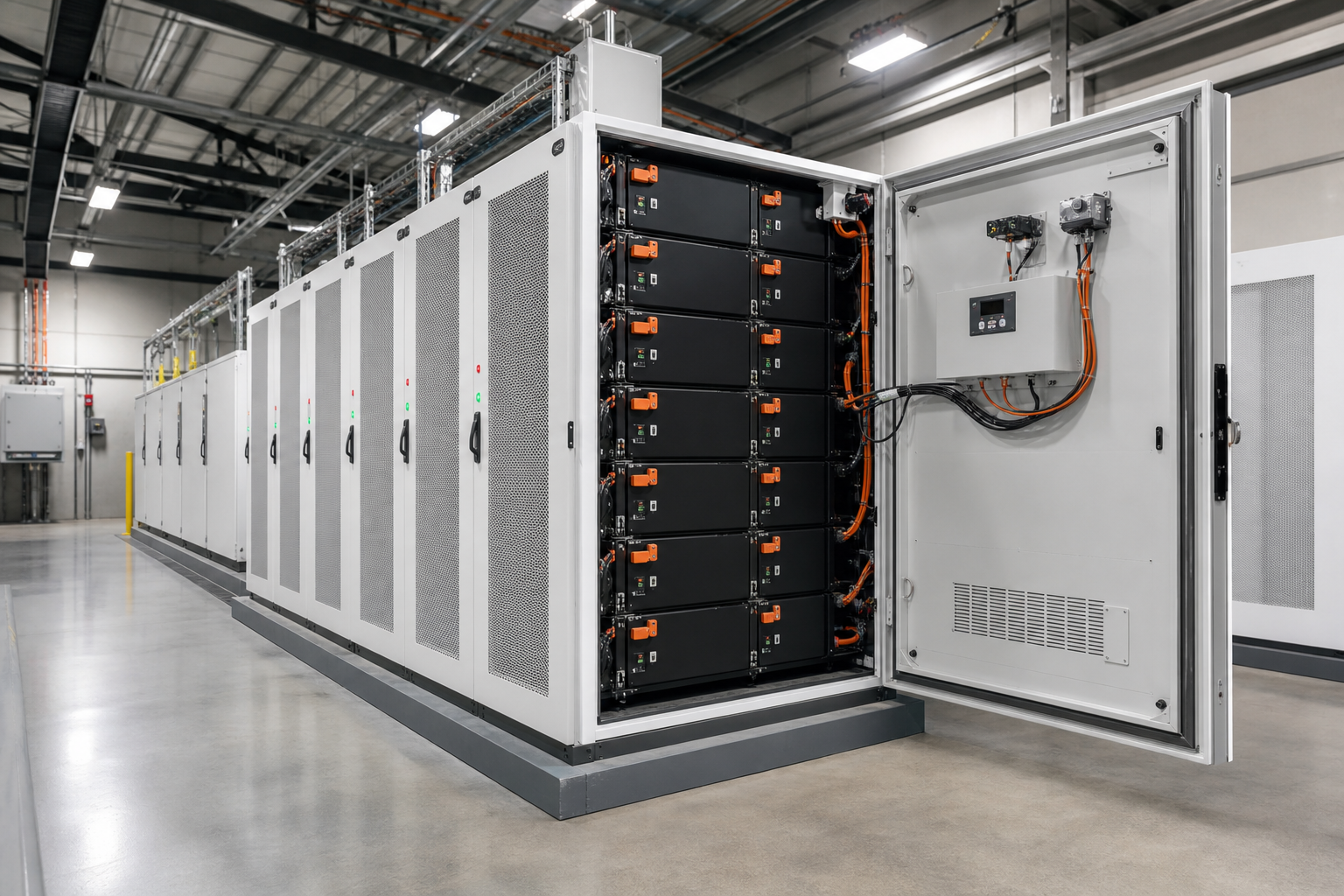
Choosing commercial battery storage is a decision you will defend for years. The wrong specification can lock in higher energy costs, expose your project to regulatory delays, or force expensive rework. Buyers who focus only on upfront price often find themselves paying more in the long run—through extra site work, missed incentives, or lost revenue from downtime. This guide translates technical specifications into commercial risk, so you can justify your choice to your management and avoid the traps that catch first-time buyers.
What drives the total cost of commercial battery storage?
The total cost of commercial battery storage is shaped by more than just the purchase price. Cycle life, depth of discharge, installation complexity, and ongoing maintenance all contribute to the real cost per kilowatt-hour delivered over the system’s lifetime. For example, a system rated for 6,000 cycles at 80% depth of discharge (DoD) will deliver more usable energy than one rated for 3,500 cycles at 70% DoD, even if both have the same nominal capacity.
To compare offers, request each supplier’s quote for the same voltage and capacity, then divide the total price by the warranted cycle count at the specified DoD. This gives a cost-per-cycle figure that can be defended in budget reviews. Installation costs can vary by 10–30% depending on enclosure type (indoor vs. outdoor), cooling method, and site preparation requirements.
Maintenance and monitoring costs are often overlooked. Systems with remote diagnostics or modular design can reduce downtime and labor costs, but may carry higher initial pricing. Factor in these operational savings when evaluating total cost of ownership.
How do certification requirements impact procurement risk?
Certification is not just a paperwork exercise. Missing or incomplete certification can delay grid connection by months and trigger costly re-testing. For commercial battery storage, the most frequently required standards include IEC 62619 (cell and battery safety), IEC 62933 (system safety), and UL 9540 (North America system safety). Some markets require additional grid-interactive or fire safety certifications.
Always request a copy of the actual test report, not just a certificate number. Confirm that the certification covers the exact model and configuration you are buying, including the enclosure and battery management system. If your project requires a custom battery pack or enclosure, clarify with the supplier whether additional certification testing is needed. Budget both time and cost for this process.
Certification gaps can also affect insurance and site permitting. Early engagement with local authorities and insurers can surface requirements that are not obvious from the supplier’s standard documentation.
What is a realistic lead time for commercial battery storage?
Lead times for commercial battery storage typically range from 8 to 20 weeks from order confirmation to delivery at site. The main drivers are cell availability, enclosure fabrication, and certification scope. If you require a standard configuration with existing certification, lead times are shorter. Custom battery solutions, non-standard voltages, or special enclosures can double the timeline.
Shipping adds further uncertainty, especially for international buyers. Sea freight can add 3–6 weeks, and customs clearance is unpredictable if documentation is incomplete. Always confirm with your supplier whether the quoted lead time includes certification, factory acceptance testing, and shipping to your site.
To avoid project delays, align your procurement schedule with the longest lead-time item. If your project depends on grid incentives or a fixed commissioning date, build in a buffer for certification or shipping delays.
Which technical specifications most affect commercial risk?
The most commercially significant specifications are system voltage, rated capacity, cycle life at stated DoD, enclosure rating (IP code), and cooling method. Mismatched voltage can force a change in inverter or site wiring, adding unexpected costs. Lower cycle life or DoD means more frequent replacement and higher lifetime cost.
Enclosure rating affects both installation cost and site approval. For outdoor installations, IP54 or higher is typically required. Cooling method (air vs. liquid) impacts both efficiency and maintenance: liquid-cooled systems handle higher loads but require more complex service.
Table: Key specification ranges for commercial battery storage
| Parameter | Typical Range | Commercial Impact |
|---|---|---|
| System Voltage | 48V – 800V | Inverter compatibility, wiring cost |
| Rated Capacity | 30kWh – 215kWh | Site sizing, backup duration |
| Cycle Life @ 80% DoD | 4,000 – 8,000 cycles | Replacement interval, cost per cycle |
| Enclosure Rating | IP20 – IP55 | Indoor/outdoor use, site approval |
| Cooling Method | Air / Liquid | Efficiency, maintenance |
How should buyers compare different commercial battery storage offers?
Comparing commercial battery storage offers requires normalizing for specification and warranty. Always request the same voltage, capacity, and cycle life at the same DoD. Ask for the warranty terms in writing, including exclusions for temperature, charge/discharge rate, and maintenance.
Use a side-by-side table to compare not just price, but also cycle life, certification status, enclosure rating, and lead time. If one offer is cheaper but has a shorter cycle life or lacks certification, the apparent saving may disappear in re-testing or early replacement costs.
Check whether installation, commissioning, and after-sales support are included. Some suppliers quote only the battery pack, leaving you exposed to hidden costs for integration or site work.
What installation and site factors can add hidden costs?
Site preparation, electrical integration, and local permitting are the main sources of hidden cost in commercial battery storage projects. For outdoor systems, concrete pads, fencing, and weatherproofing can add 10–20% to the project budget. Indoor systems may require HVAC upgrades or fire suppression.
Electrical integration is often underestimated. Confirm that the battery system’s voltage and communication protocols match your inverters and site controls. Mismatches can require custom engineering or additional hardware.
Permitting timelines vary widely. Early engagement with local authorities can surface requirements for fire rating, seismic anchoring, or noise limits that are not covered by standard supplier documentation.
How do cycle life and depth of discharge affect long-term cost?
Cycle life and depth of discharge (DoD) determine how many times you can use the full capacity of the battery before replacement. A battery rated for 6,000 cycles at 80% DoD will last longer and deliver more total energy than one rated for 4,000 cycles at 70% DoD. The difference can add or subtract years from your replacement schedule.
To calculate cost per usable kilowatt-hour, divide the total system price by the product of rated capacity and warranted cycle count at the stated DoD. This figure is more defensible in budget reviews than upfront price alone.
Some suppliers quote high cycle life at shallow DoD, which inflates the number. Always compare at the same DoD, and ask for the test conditions.
What are the most common certification and compliance pitfalls?
The most common pitfalls are incomplete certification scope, expired test reports, and certificates that do not cover the final system configuration. For example, a battery certified as a cell or module may not be accepted by authorities if the enclosure or battery management system is different.
Always check that the certification covers the full assembled system, including enclosure and electronics. For international shipments, confirm that certificates are recognized by your local authorities and insurers.
Request the full test report, not just a summary. If the supplier cannot provide it, budget time and cost for additional testing or certification.
How can buyers reduce lead time and procurement risk?
To reduce lead time, standardize your specification as much as possible and select a supplier with existing certification for your required configuration. Custom battery solutions or non-standard enclosures add both time and risk.
Clarify all documentation requirements at the quotation stage, including test reports, shipping documents, and installation manuals. Missing paperwork is a frequent cause of customs delays and site rejections.
Build a buffer into your project schedule for certification or shipping delays. If your project is tied to a fixed commissioning date, confirm with the supplier that all critical-path items are in stock or can be delivered within your window.
What should buyers do before placing an order?
Before placing an order for commercial battery storage, review the full specification, warranty terms, and certification documents. Confirm compatibility with your site’s inverters, controls, and installation environment. Request a technical assessment or site survey if there is any uncertainty.
Prepare a checklist of required documentation, including test reports, installation manuals, and shipping paperwork. Share this with your supplier and confirm delivery timelines for each item.
Finally, brief your internal stakeholders on the commercial risks and mitigation steps. A well-documented procurement process is easier to defend if issues arise later.
Frequently asked questions
What is the typical cycle life for commercial battery storage systems?
Most commercial battery storage systems offer 4,000–8,000 cycles at 80% depth of discharge. Always confirm the test conditions and compare at the same DoD.
How do I ensure a battery system meets local certification requirements?
Request the full test report for the exact model and configuration. Confirm with local authorities and insurers that the certificates are accepted in your market.
What factors most often delay delivery of commercial battery storage?
Delays are most often caused by custom enclosure fabrication, incomplete certification, or missing shipping documentation. Clarify these at the quotation stage.
AJPOWER-Battery