
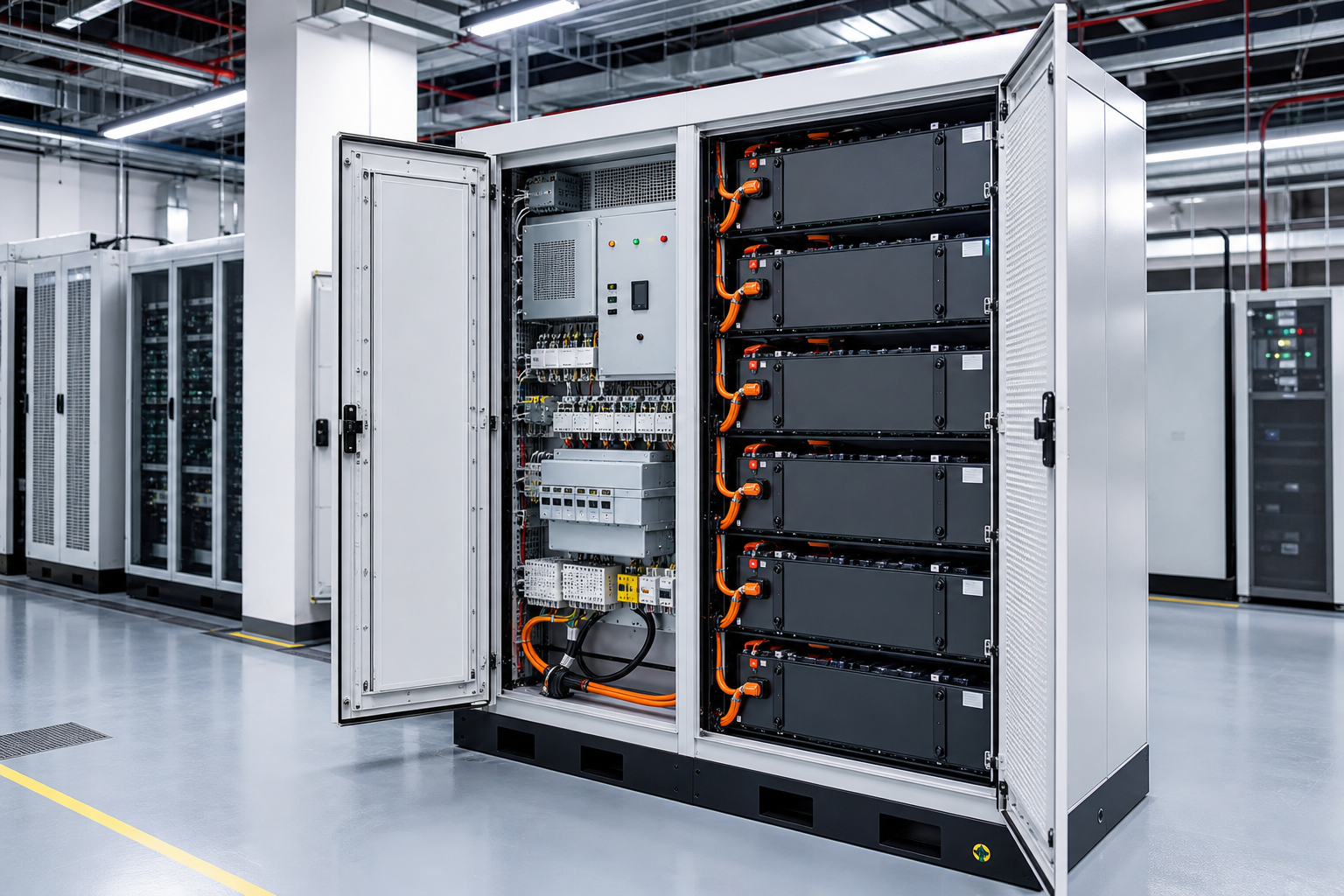
Choosing a BESS energy management system is a decision you will live with for years. If the system mismatches your load profile or grid requirements, you risk stranded capacity, higher operating costs, or regulatory non-compliance. Most buyers focus on headline specs, but the real risk is in integration, compatibility, and after-sales support. This guide details the technical and commercial checks that matter when sourcing from a factory.
What is a BESS energy management system and why does it matter?
A BESS energy management system (EMS) is the control layer that manages charging, discharging, grid interaction, and safety in a battery energy storage system. The EMS determines how effectively your storage asset responds to time-of-use tariffs, demand charges, and backup requirements. A mismatch between EMS capability and site needs can erode 5–15% of annualized returns, especially in commercial and industrial scenarios where load profiles are complex.
The EMS is not just software; it includes the controller hardware, communication protocols, and integration with the battery management system (BMS) and inverter. Inadequate EMS selection can lead to failed grid compliance tests or inability to participate in demand response programs. For buyers, the EMS is the difference between a compliant, revenue-generating asset and a stranded investment.
How do I specify EMS requirements for commercial and industrial storage?
Start by mapping your site’s load profile, grid connection type, and operational goals. For peak shaving, the EMS must support real-time load forecasting and fast response. For backup, seamless transition and black start capability are essential. If you plan to export to the grid, check that the EMS supports local utility protocols (such as Modbus, DNP3, or IEC 61850).
Table: Example EMS Specification Checklist
| Requirement | Typical Range | Measurement Condition |
|---|---|---|
| Response time | 50–200 ms | Grid signal to battery action |
| Supported protocols | Modbus, CAN, IEC 61850 | Factory default |
| Load forecast horizon | 15 min–24 hr | Configurable |
| Black start | Yes/No | Factory option |
Request a technical specification sheet from each supplier and compare against your site requirements. Do not assume that all EMS are equivalent; even systems with similar headline specs may differ in protocol support or response time.
Which standards and certifications must a BESS EMS comply with?
For commercial and industrial buyers, IEC 62619 (for battery safety) and UL 1973 (for stationary battery systems) are the baseline. The EMS itself should be tested as part of the full system, not just as a standalone controller. Some markets require additional grid compliance (such as IEC 62477-1 for power electronic converters).
Always request certificates for the exact model and configuration quoted. For example, AJPOWER’s AJ-RACK-30K is certified to UL 1973:2022, and AJ-CESS-100 to IEC 62477-1:2022. If a supplier cannot provide a certificate with your quoted model number, treat this as a red flag for both compliance and insurance risk.
How do I compare EMS integration and factory testing?
Integration risk is often underestimated. An EMS that is not fully integrated with the battery management system (BMS) and inverter can cause commissioning delays or warranty disputes. Ask for a factory test report showing end-to-end operation: charging, discharging, grid interaction, and fault response. This report should list the exact hardware and software versions tested.
Some suppliers offer only EMS hardware, leaving integration to the installer. This shifts risk to the buyer. A fully integrated system, tested at the factory, reduces commissioning time and after-sales troubleshooting costs by 20–40% compared to field integration. Insist on a pre-shipment test with your configuration.
What are the main cost drivers and how do I compare supplier quotes?
EMS cost is driven by controller hardware, software licensing, integration effort, and certification scope. To compare quotes, have both suppliers quote the same voltage, capacity, and protocol requirements. Divide the total quoted price by the rated cycle count to estimate cost per cycle. This normalizes for differences in battery life and EMS sophistication.
Beware of hidden costs: some EMS platforms require annual software fees or paid firmware updates. Ask for a full breakdown of upfront and recurring costs. If possible, request a sample contract to review terms on software updates, remote support, and warranty coverage.
What procurement checks reduce risk when sourcing from a factory?
Before placing an order, confirm the following with your supplier:
- Factory test report for your exact configuration
- Certificates (IEC, UL) for the quoted model and EMS version
- List of supported protocols and grid codes
- Warranty terms covering EMS, BMS, and integration
- Lead time for both sample and mass production (AJPOWER: 7 days for samples, 30–45 days for mass production)
Do not accept generic certificates or test reports. Each document should reference your quoted model and EMS version. This protects you in the event of a compliance audit or system failure.
How do I ensure after-sales support and future compatibility?
After-sales support for EMS is often overlooked until a fault occurs. Ask about remote diagnostics, firmware update policy, and availability of spare parts. For multi-year projects, clarify how EMS software updates are delivered and whether they require on-site intervention or can be done remotely.
Compatibility with future grid codes or inverter models is another risk. Some EMS platforms are locked to specific hardware, while others allow field upgrades. Request a roadmap or statement of compatibility from the supplier. This can prevent costly retrofits if regulations change mid-project.
Before finalizing your order, review the full technical specification, factory test report, and certification documents for your quoted configuration. Confirm integration with your site’s inverter and grid requirements. If in doubt, request a technical assessment from your supplier’s engineering team.
Frequently asked questions
What protocols should a BESS energy management system support for industrial applications?
For industrial BESS, the EMS should support Modbus, CAN, and IEC 61850 at minimum. Some utilities require DNP3 or proprietary protocols. Always match protocol support to your site’s inverter and grid requirements.
How do I verify the EMS is factory-integrated and tested?
Request a factory test report listing your quoted model, EMS version, and test results for charging, discharging, grid interaction, and fault response. This reduces commissioning risk and after-sales troubleshooting.
What is the impact of missing EMS certification on insurance or compliance?
Missing EMS certification (e.g., IEC 62619, UL 1973) can invalidate insurance, delay grid connection, or require costly retrofits. Always request certificates for your exact quoted configuration.
AJPOWER-Battery