
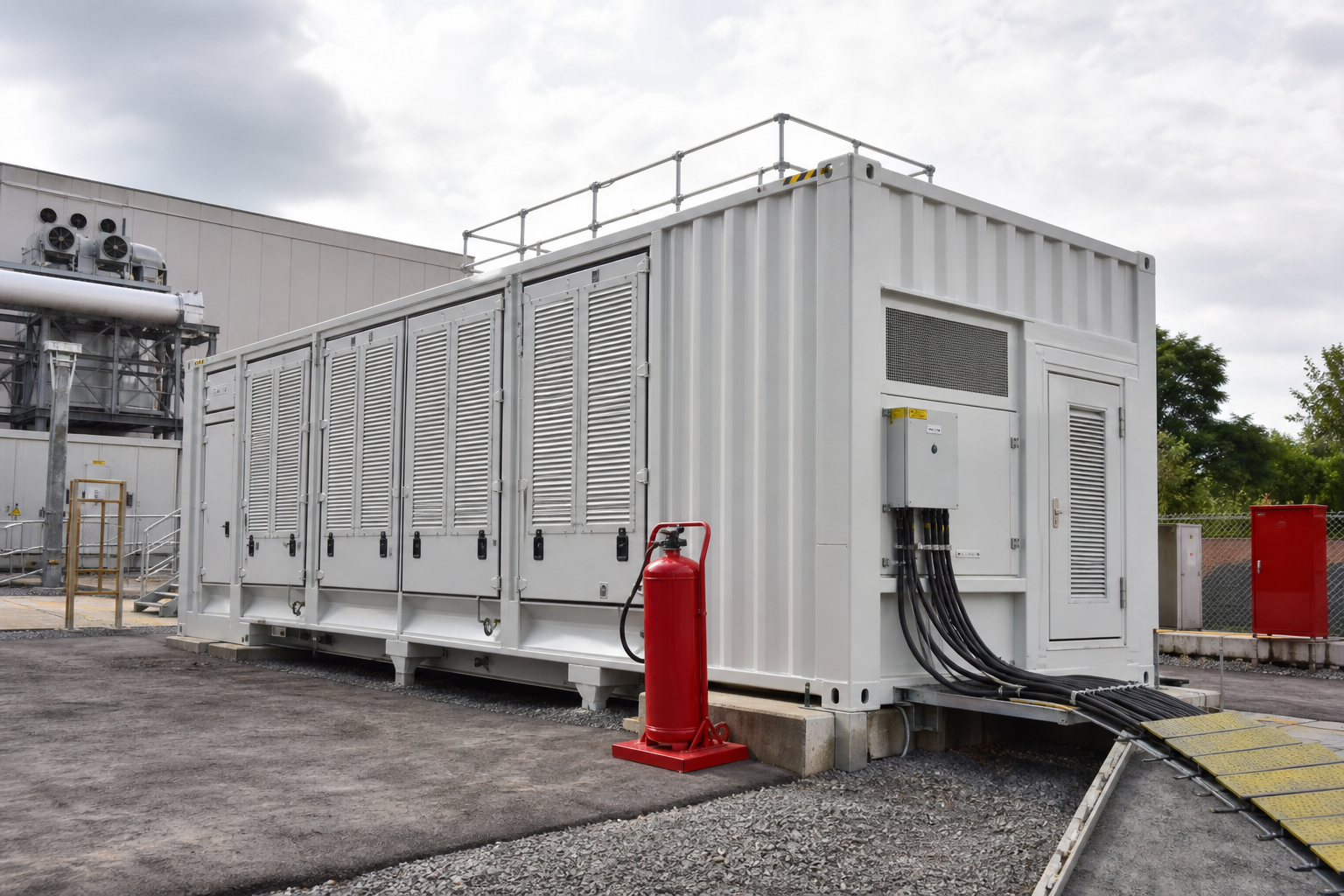
Underestimating your battery energy storage system rental needs can result in unplanned downtime or penalty fees that far exceed any savings from a lower initial quote. Most buyers focus on headline capacity, but the real risk lies in mismatched duty cycles, unclear rental terms, and supplier support gaps. This guide translates technical details into commercial risk, so you can defend your decision and avoid the common traps in factory sourcing.
How do I size a battery energy storage system rental for my project?
To size a battery energy storage system rental, start with your peak load (kW), total required energy (kWh), and the maximum allowable downtime. For commercial and industrial applications, it is common to specify both a continuous power rating and a total energy throughput over the rental period. For example, a 100kWh system rated at 50kW continuous output will support a 50kW load for two hours. If your site experiences variable loads, use the highest sustained load for at least 30 minutes as your sizing benchmark.
Battery chemistry affects usable capacity. LiFePO4 systems typically allow 80% depth of discharge (DoD) without significant cycle life loss, so a 100kWh nominal system delivers 80kWh usable per cycle. Always request the usable (not nominal) capacity in supplier quotes. Oversizing by 10-20% is common to account for inverter losses and temperature derating, but oversizing beyond this increases rental cost without operational benefit.
For rentals longer than one month, clarify whether the system will be cycled daily or only during outages. Daily cycling requires higher cycle life and may justify a premium for newer or higher-grade cells. Short-term, infrequent use can tolerate older or lower-cycle batteries at a lower cost per rental period.
What technical specifications should I compare between rental offers?
Comparing battery energy storage system rental offers requires more than matching kWh and kW ratings. Key specifications to request and compare include:
- Usable capacity (kWh at stated DoD and temperature)
- Continuous and peak power output (kW)
- Cycle life at rental DoD (e.g., 6000 cycles @ 80% DoD)
- System voltage and inverter compatibility
- Ingress protection (IP) rating for site conditions
- Thermal management: air-cooled vs. liquid-cooled
- Compliance with relevant standards (IEC 62619, UL 9540, etc.)
Request all suppliers quote the same usable capacity and power output, then divide the quoted rental fee by the number of cycles or total kWh delivered to compare cost per kWh or per cycle. This normalizes for differences in battery age and chemistry.
Below is a comparison table of typical commercial ESS rental specs:
| Spec | Air-Cooled Cabinet | Liquid-Cooled Cabinet |
|---|---|---|
| Usable Capacity (kWh) | ~100 | ~215 |
| Cycle Life @ 80% DoD | 6000 | 8000 |
| IP Rating | IP54 | IP55 |
| Thermal Management | Air-cooled | Liquid-cooled |
| Weight (kg) | ~1000 | ~2000 |
What are the hidden costs and risks in battery energy storage system rental contracts?
Hidden costs in battery energy storage system rental contracts often arise from unclear terms on delivery, installation, removal, and overuse. Many rental agreements impose penalty rates for exceeding the contracted number of cycles or energy throughput. If your application may exceed the agreed usage, negotiate these rates upfront or specify a buffer in your sizing.
Transport and installation are rarely included in the headline rental fee. Clarify who is responsible for site preparation, grid connection, and commissioning. Removal fees can also be substantial, especially if the site is remote or requires special handling for hazardous goods.
Insurance and liability for damage or grid incidents are another overlooked risk. Confirm in writing who bears responsibility for fire, electrical faults, or environmental incidents during the rental period. If the supplier’s insurance is limited, you may need to arrange additional coverage, which adds to your total project cost.
How do I evaluate a factory or supplier for rental ESS reliability?
Evaluating a factory or supplier for battery energy storage system rental reliability starts with their track record in your application type and region. Request references for similar deployments and ask for documented evidence of compliance with IEC, UL, or local standards. A supplier who cannot provide this is a risk, regardless of price.
Check for clear documentation on maintenance, remote monitoring, and emergency support. For multi-month rentals, remote diagnostics and rapid-response service are essential. Ask for a written service level agreement (SLA) specifying maximum response times for faults or failures.
Assess the supplier’s inventory depth. If they rely on just-in-time assembly or have limited stock, your project is exposed to delays if a replacement or repair is needed. For critical operations, prioritize suppliers with local or regional support capability.
What procurement checks should I complete before signing a rental agreement?
Before signing a battery energy storage system rental agreement, complete a technical review of the specification, confirm site compatibility, and clarify all commercial terms in writing. Use a checklist to avoid common oversights:
- Specification matches your peak load, usable energy, and duty cycle
- Supplier provides documentation for all claimed standards
- Delivery, installation, and removal responsibilities are defined
- Penalty rates for overuse or damage are stated
- Insurance and liability terms are clear
- Service and support response times are in the contract
Request a pre-rental site survey if possible. This identifies grid connection issues, access constraints, and safety hazards that could delay installation or increase costs. For international rentals, confirm customs clearance and local regulatory compliance before committing.
How do I compare rental to purchase for battery energy storage systems?
Comparing rental to purchase for battery energy storage systems depends on project duration, cash flow, and risk tolerance. Rental avoids upfront capital expenditure and shifts maintenance risk to the supplier, but the total cost over long periods may exceed purchase. For projects under 12 months or with uncertain future needs, rental is often more defensible to management, as it limits exposure to technology obsolescence and asset disposal.
To compare, calculate the total rental fee (including all hidden costs) and divide by the total kWh delivered over the project. For purchase, add depreciation, maintenance, and end-of-life disposal to the quoted price, then divide by expected kWh throughput. Rental is commercially justified if the per-kWh cost is lower or if risk transfer is a higher priority than asset ownership.
What is the next step after shortlisting battery energy storage system rental suppliers?
After shortlisting battery energy storage system rental suppliers, request a detailed technical and commercial proposal from each. Compare not just price, but also specification, support, and contract terms. If possible, arrange a technical call with the supplier’s engineering team to clarify any ambiguities in the offer.
Review the supplier’s documentation for compliance, maintenance, and emergency procedures. If your project is time-critical, confirm lead times for delivery and installation in writing. Only proceed to contract once all technical and commercial risks are addressed and documented.
For buyers with unique site requirements or regulatory constraints, consider requesting a custom battery pack or tailored system configuration. AJPOWER and similar manufacturers can provide technical assessments to match your application, but always validate proposals against your own project requirements before committing.
Frequently asked questions
How do I calculate the usable capacity for a rental battery energy storage system?
Multiply the nominal capacity (kWh) by the allowed depth of discharge (DoD). For example, a 100kWh system at 80% DoD provides 80kWh usable per cycle.
What standards should a rental battery energy storage system comply with?
Look for IEC 62619 for cell safety, UL 9540 for system safety, and local electrical codes. Always request documentation from the supplier for claimed certifications.
Can I extend a rental period if my project overruns?
Most suppliers allow rental extensions, but rates may increase and availability is not guaranteed. Negotiate extension terms and rates before signing the initial contract.
AJPOWER-Battery