
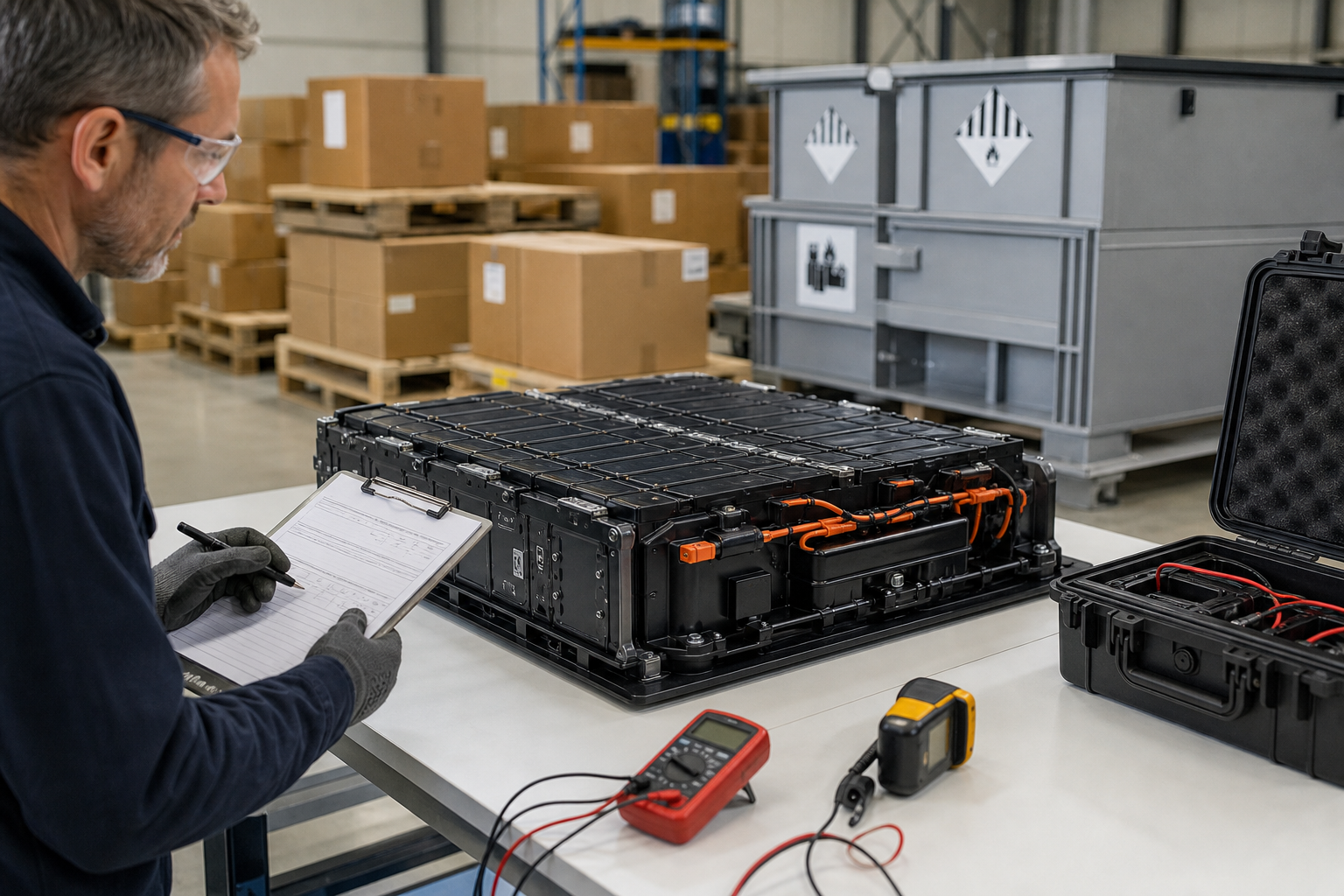
Shipments get stuck at customs every month because buyers assume a supplier’s UN38.3 paperwork covers their exact battery. It often doesn’t. If you’re sourcing lithium battery packs or energy storage systems for international projects, you need to know what UN38.3 really requires, how it’s tested, and where field reality diverges from the spec sheet. This guide explains the latest UN38.3 news for B2B buyers, with practical checks to keep your shipments moving and your installations safe.
What is UN38.3 and why does it matter for B2B buyers?
UN38.3 is the transport test standard for lithium batteries, required by IATA, IMDG, and most customs authorities worldwide. Without a valid UN38.3 test report, your lithium battery shipment can be blocked, delayed, or even destroyed at the border. For B2B buyers, this means every battery energy storage system, lithium battery pack, or custom battery solution you import must have model-specific UN38.3 documentation.
Many buyers get caught out when a supplier’s certificate only covers the cell, not the assembled pack or system. UN38.3 applies to the final shipped configuration, including BMS, enclosure, and wiring. Always check the certificate lists the full model number and matches your purchase order exactly.
- UN38.3 covers all lithium batteries over 100Wh, including LiFePO4 packs and large energy storage cabinets.
- Test reports must be from an accredited lab and less than one year old for some customs.
- Shipping without proper UN38.3 paperwork risks fines, delays, and lost product.
What does UN38.3 actually test on a lithium battery pack?
UN38.3 tests simulate the stresses of air, sea, and land transport. The standard covers altitude, thermal cycling, vibration, shock, external short circuit, impact, overcharge, and forced discharge. Each test is run on a sample pack built exactly like your production units, with all safety features and BMS installed.
Failures in the field often trace back to differences between the tested sample and the shipped product. For example, swapping a BMS model or changing cable gauge after certification invalidates the test. UN38.3 isn’t just a paperwork exercise—it’s a real-world safety check.
| Test | Condition | Common Failure |
|---|---|---|
| Altitude | Pressure < 11.6kPa, 6h | Case swelling, venting |
| Thermal | -40°C to 72°C, 10 cycles | Seal leaks, BMS error |
| Vibration | 7Hz–200Hz, 3h/axis | Loose terminals, cracked welds |
| Shock | 150g, 6ms, 6 times | Internal cell damage |
How do clearance, cable runs, and installation affect UN38.3 compliance?
Clearance and cable routing are often ignored in the lab but cause failures on site. If you install a battery cabinet with less than the recommended service clearance, heat builds up and stresses seals and terminals. Poor cable runs can put strain on connectors, leading to vibration failures that UN38.3 would have caught if tested as installed.
Ambient temperature is another real-world factor. UN38.3 tests thermal cycling, but actual installations in hot climates may see higher sustained temperatures. Always check the tested temperature range matches your site conditions, and ask the supplier for evidence if you’re installing in extreme environments.
- Maintain at least the minimum clearance listed in the installation manual—typically 200–500mm for cabinets.
- Use cable supports to avoid mechanical stress on terminals.
- Confirm the tested temperature range covers your application’s extremes.
What documentation should you request from your supplier?
Don’t rely on a generic UN38.3 certificate. You need the full test report, including photos of the tested unit, the test sequence, and the lab’s accreditation. The report should show your exact battery model, voltage, capacity, and configuration.
Ask for the summary test report (Section 38.3.5) and the full test data. For large shipments, customs may request both. If your supplier can’t provide these, your shipment is at risk.
| Document | What to Check |
|---|---|
| UN38.3 Test Report | Model, voltage, capacity, BMS, enclosure, photos |
| Lab Accreditation | ILAC, CNAS, or equivalent |
| Summary Certificate | Section 38.3.5, matches your PO |
How do you verify a UN38.3 certificate is valid?
Field failures often start with forged or expired certificates. Always check the lab’s accreditation number and look up the lab on the ILAC or CNAS website. The test date should be within the last year for most customs, and the report must match your battery’s exact configuration.
If the supplier refuses to share the full report, that’s a red flag. Some buyers only discover the problem when customs holds the shipment for inspection. Prevention is cheaper than re-exporting or scrapping a non-compliant batch.
- Check the lab’s name and accreditation online.
- Verify the test date and battery details match your order.
- Request photos of the tested unit in the report.
What’s new in UN38.3 requirements and enforcement?
Recent UN38.3 news includes stricter enforcement at ports and airports, especially for large lithium battery packs and energy storage systems. Some customs authorities now require digital submission of test reports and may cross-check lab accreditation in real time.
There’s also a trend toward requiring the Section 38.3.5 summary in addition to the full report. For B2B buyers, this means extra paperwork and more scrutiny of documentation. If your supplier’s paperwork is incomplete or outdated, expect delays.
- Digital submission of UN38.3 reports is now common at major ports.
- Section 38.3.5 summary is increasingly mandatory.
- Enforcement is strictest for shipments over 100Wh per battery.
How does UN38.3 interact with other certifications?
UN38.3 is only a transport safety standard. It does not replace IEC 62619, UL 1973, or CE requirements for product safety and EMC. For example, AJPOWER’s 5kWh wall-mounted LiFePO4 battery is certified to both UN38.3 and IEC 62619, but each covers different risks.
When sourcing, ask for the full list of certifications and check which apply to your market and application. UN38.3 is always needed for shipping, but you may also need IEC, UL, or CE for installation and operation.
| Standard | Scope | Applies To |
|---|---|---|
| UN38.3 | Transport safety | All lithium batteries |
| IEC 62619 | Product safety | Industrial batteries |
| UL 1973 | Product safety | Stationary batteries |
| CE | EMC & safety | EU market |
What should you do next to avoid shipment delays?
Before placing your next order, request the UN38.3 test report and summary for the exact battery model and configuration you plan to buy. Confirm the lab’s accreditation and test date. Review the installation manual for clearance, cable routing, and ambient temperature limits, and make sure your site matches the tested conditions.
If you’re unsure, ask your supplier for a technical assessment or third-party verification. A few hours of checking paperwork and site conditions can save weeks of customs delays and thousands in lost product.
Frequently asked questions
Does UN38.3 certification cover custom battery packs?
Only if the custom battery pack is tested and certified in its final shipped configuration, including BMS and enclosure. Cell-level certification is not enough.
How often do UN38.3 certificates need to be renewed?
There is no fixed renewal period, but many customs require test reports to be less than one year old. Always check the test date before shipping.
Can I ship lithium batteries without a UN38.3 certificate if they are for internal company use?
No. UN38.3 certification is required for all lithium battery shipments by air or sea, regardless of end use or consignee.
AJPOWER-Battery