
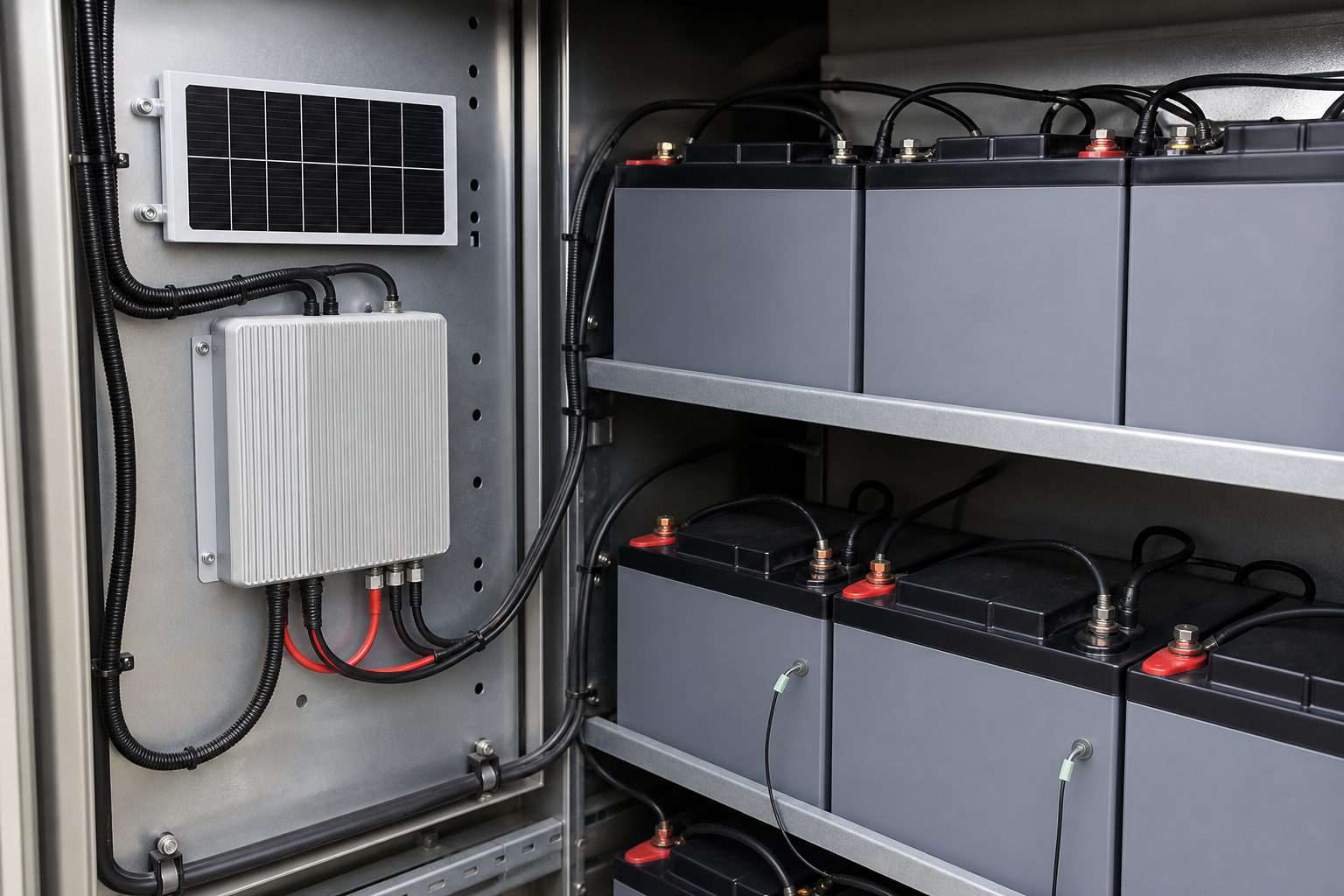
Most buyers assume a solar battery maintainer will work as long as the voltage matches. In the field, that’s where failures start. Undersized maintainers, poor cable runs, and ignored ambient temperatures leave batteries undercharged or sulfated within months. If you want your batteries to last, you need to match the maintainer to real conditions, not just the datasheet.
What is a solar battery maintainer and when is it needed?
A solar battery maintainer is a low-current charger designed to keep batteries at full charge during periods of infrequent use or storage. It’s essential for backup systems, standby generators, and remote installations where grid power is unreliable or absent. The maintainer offsets self-discharge and parasitic loads, preventing sulfation in lead-acid or deep discharge in lithium batteries. In practice, you’ll see batteries fail early if left without a maintainer for more than a few weeks, especially in hot or humid environments.
For B2B buyers, maintainers are commonly used in telecom backup, industrial controls, and off-grid monitoring. The right maintainer extends battery life by hundreds of cycles, but only if it’s sized and installed correctly. Too small, and it can’t keep up with self-discharge. Too large, and it risks overcharging or heating the battery.
Typical maintainers output 0.5–5A at 12V, 24V, or 48V, but the required current depends on battery capacity and chemistry. Always check the battery manufacturer’s recommended float voltage and current before specifying a maintainer.
What field failures are caused by the wrong solar battery maintainer?
In the field, the most common failure is sulfation in lead-acid batteries. This happens when the maintainer can’t keep the battery fully charged, especially in high temperatures or with long cable runs. For lithium batteries, undercharging can trigger BMS protection, leaving the system offline when needed most. Overcharging is less common with modern maintainers, but still occurs if the charge profile doesn’t match the battery chemistry.
Another failure is thermal runaway in poorly ventilated enclosures. Maintainers generate heat, and if installed without proper clearance or airflow, internal temperatures can exceed 40°C. This accelerates battery degradation and can void warranties. Always measure the ambient temperature at the installation site, not just the room temperature.
Service access is often overlooked. If maintainers are mounted behind batteries or inside crowded cabinets, routine inspection and replacement become difficult. In one installation, a maintainer failed because its fuse was inaccessible without removing the entire battery bank—a two-hour job that could have been avoided with better planning.
How do you size a solar battery maintainer for your battery system?
Sizing a solar battery maintainer starts with the battery’s self-discharge rate and any standby loads. For lead-acid, self-discharge is typically 3–5% per month at 25°C; for lithium, it’s lower, around 2–3%. Multiply the battery capacity by the self-discharge rate to estimate monthly loss, then divide by 30 to get daily loss. Add any continuous parasitic loads.
For example, a 200Ah 12V lead-acid battery loses about 0.8–1Ah per day to self-discharge at 25°C. If you have a 0.2A standby load, that’s another 4.8Ah per day. Your maintainer should supply at least 5.6–6Ah per day, or 0.25A continuous. In hot climates, increase the current by 20–30% to compensate for higher self-discharge.
Always check the battery’s recommended float voltage and maximum charge current. For lithium batteries, the maintainer must have a compatible charge profile—typically constant voltage with current limiting. Oversized maintainers can damage small batteries, so match the output to the minimum and maximum battery sizes in your system.
What installation constraints matter beyond the spec sheet?
Clearance, cable runs, and ambient temperature are the main constraints ignored by spec sheets. In the field, maintainers are often installed in tight cabinets or outdoor enclosures. If there’s less than 50mm clearance on all sides, heat buildup can derate the maintainer’s output by 10–20%. Long cable runs introduce voltage drop, especially at low currents. Use the largest feasible cable gauge and keep runs under 5m where possible.
Ambient temperature at the maintainer—not just the battery—affects output. Most maintainers are rated at 25°C, but output can drop by 15–30% at 40°C. Always check the derating curve in the manual, and if none is provided, test a sample at your site’s peak temperature.
Service access is critical for maintenance and replacement. Mount maintainers where fuses and terminals are reachable without removing other equipment. Label all connections clearly, and use terminal covers to prevent accidental shorts during service.
How do different battery chemistries affect maintainer selection?
Lead-acid and lithium batteries require different charge profiles. Lead-acid maintainers use a float voltage of 2.25–2.30V per cell, while lithium batteries need a precise constant voltage (typically 3.55–3.65V per cell for LiFePO4) with current limiting. Using the wrong profile can cause undercharge, overcharge, or trigger BMS faults.
Temperature compensation is standard for lead-acid maintainers but not always available for lithium. In hot climates, a maintainer without temperature compensation can overcharge lead-acid batteries, reducing cycle life by up to 30%. For lithium, overvoltage protection is handled by the BMS, but the maintainer must not exceed the battery’s maximum voltage.
Always confirm the maintainer’s compatibility with your battery chemistry. For mixed systems, use separate maintainers for each chemistry, or specify a multi-profile maintainer with selectable settings and clear documentation.
What technical specifications should you compare when sourcing maintainers?
When comparing solar battery maintainers, focus on voltage range, output current, charge profile, temperature derating, and protection features. The table below summarizes key specifications to compare:
| Specification | Typical Range | What to Check |
|---|---|---|
| Output Voltage | 12V / 24V / 48V | Matches battery system voltage |
| Output Current | 0.5–5A | Meets self-discharge + standby load |
| Charge Profile | Float / Constant Voltage | Matches battery chemistry |
| Temperature Derating | 10–30% at 40°C | Check derating curve or test sample |
| Protections | Overvoltage, Reverse Polarity, Short Circuit | Essential for unattended sites |
| Certifications | IEC 62109, UL 1741 | Required for export or insurance |
Ask suppliers for detailed datasheets and test reports. If possible, request a sample for on-site testing under your actual installation conditions, including peak temperature and cable length.
How do you evaluate suppliers and factories for solar battery maintainers?
Evaluating a supplier goes beyond checking the spec sheet. Start by reviewing their production quality, sample availability, and willingness to provide technical support. Ask for references from similar installations—ideally in your climate and application.
Request a sample maintainer and test it at your site’s maximum ambient temperature. Check for stable output, proper charge profile, and reliable protections. Inspect build quality: terminals should be solid, labels clear, and enclosures rated for your environment (IP54 or higher for outdoor use).
For factory sourcing, visit the production line if possible. Confirm that the supplier can customize cable lengths, terminal types, or mounting brackets to fit your installation. A good supplier will provide clear installation manuals and offer after-sales support for troubleshooting and replacement.
What are the maintenance and inspection requirements for solar battery maintainers?
Routine inspection is critical to avoid silent failures. Check maintainers monthly for indicator status, output voltage, and signs of overheating. Replace fuses or damaged cables immediately. For outdoor or remote sites, specify maintainers with remote monitoring or dry-contact alarms if available.
Annual maintenance should include cleaning terminals, checking cable insulation, and verifying output with a calibrated meter. In high-dust or corrosive environments, open the enclosure and inspect for debris or corrosion. Document all inspections and replacements for warranty and compliance records.
Plan for replacement every 3–5 years, or sooner in high-temperature or high-humidity environments. Keep spares on hand for critical sites, and train local staff in basic troubleshooting and replacement procedures.
How do you ensure compatibility with existing battery systems?
Compatibility checks start with matching voltage and current, but also include charge profile, connector type, and enclosure rating. For systems with integrated BMS, confirm that the maintainer’s output will not trigger protection faults. Test a sample with your battery system before bulk ordering.
For mixed battery banks or parallel systems, use separate maintainers or a multi-channel unit with isolated outputs. Avoid connecting a single maintainer across batteries of different chemistries or ages, as this can cause uneven charging and early failure.
Document all settings and installation details. Label cables and terminals to prevent incorrect connections during maintenance or replacement. If in doubt, consult the battery manufacturer or a qualified commissioning engineer before installation.
What procurement checks should you make before ordering from a factory?
Before placing an order, confirm all technical specifications in writing. Request a sample for on-site testing, including at peak ambient temperature and with your actual cable runs. Review the supplier’s warranty terms, after-sales support, and spare parts availability.
Ask for production lead time, minimum order quantity, and packaging details. For export, verify that the maintainer meets all relevant certifications (such as IEC 62109 or UL 1741) required by your market or insurance provider. If possible, visit the factory or request a video tour of the production line.
Keep a record of all correspondence and test results. Only proceed with a bulk order after the sample passes your site-specific tests and the supplier demonstrates clear technical support and documentation.
What is the next step for B2B buyers?
Review your current battery systems and installation conditions. List all technical requirements—voltage, current, charge profile, ambient temperature, cable length, and service access. Request detailed datasheets and a sample maintainer from your shortlisted suppliers. Test the sample under your actual site conditions, and document the results before committing to a bulk order. This approach prevents costly field failures and ensures long-term battery reliability.
Frequently asked questions
Can a solar battery maintainer be used for both lead-acid and lithium batteries?
Only if the maintainer supports both charge profiles. Lead-acid and lithium batteries require different float voltages and charge algorithms. Using the wrong profile risks undercharge or BMS faults.
How does ambient temperature affect solar battery maintainer performance?
Most maintainers are rated at 25°C. At higher temperatures, output current can drop by 15–30%. Always check the derating curve or test a sample at your site’s peak temperature.
What certifications should a solar battery maintainer have for export?
Common certifications include IEC 62109 and UL 1741. Confirm with your local regulations and insurance provider which standards are required for your application and market.
AJPOWER-Battery