
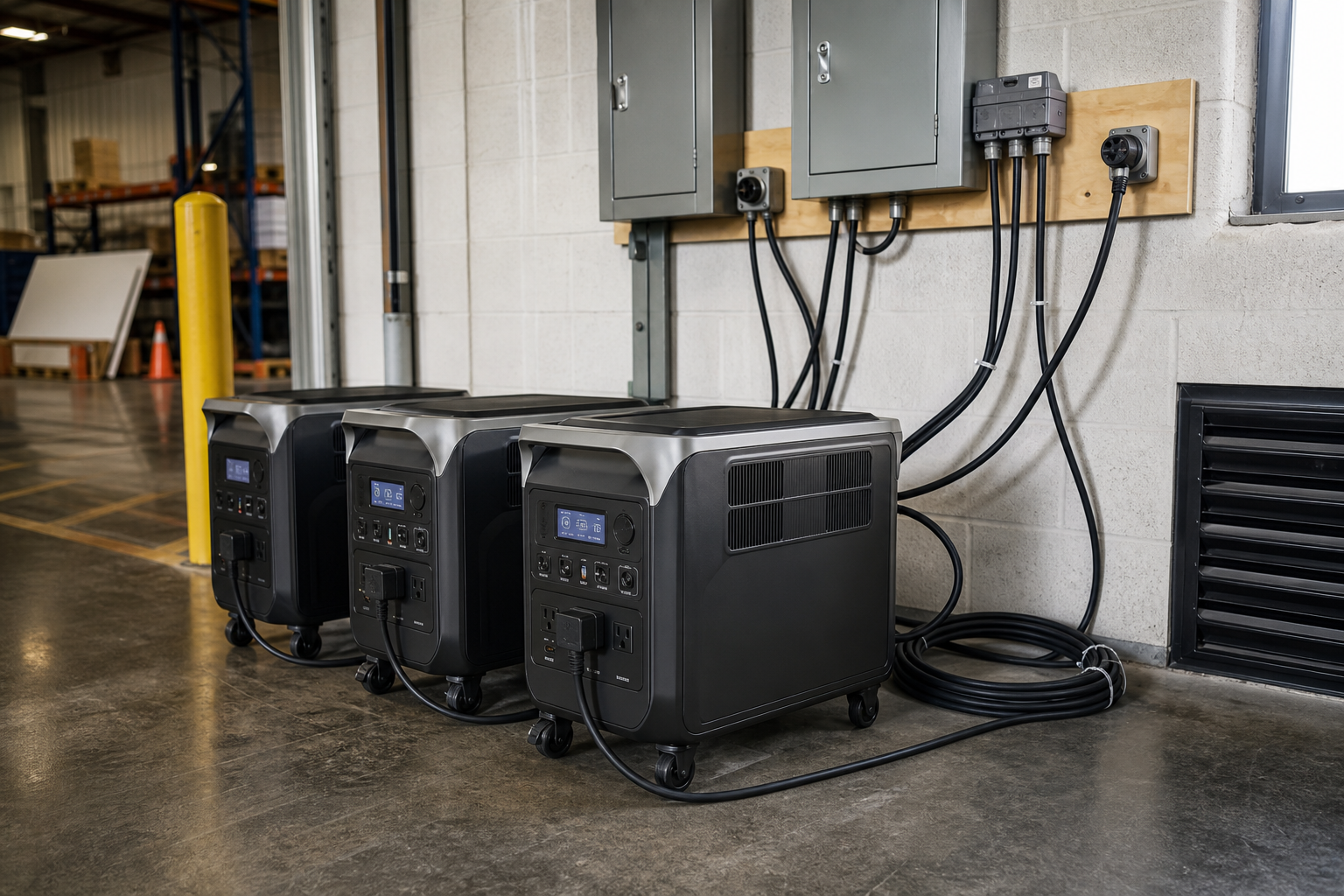
Most buyers assume that picking a lifepo4 portable power station is just about matching capacity to load. But in the field, failures usually come from missed installation realities: cable runs too long, ambient temperatures outside spec, or a datasheet that quietly assumes perfect conditions. If you want a system that works as specified, you need to ask the right questions up front—and check what the factory leaves out.
What is a lifepo4 portable power station and how is it used?
A lifepo4 portable power station is a self-contained unit combining lithium iron phosphate (LiFePO4) cells, a battery management system (BMS), inverter, and charging electronics. These are used for backup, off-grid, or mobile power in commercial, industrial, and emergency applications. Unlike fixed ESS, portable stations are designed for rapid deployment and relocation, but that flexibility comes with trade-offs in installation and maintenance.
Typical use cases include powering tools on construction sites, providing backup for telecom or IT equipment, and temporary event setups. The units range from 500Wh to 10kWh, with output voltages from 12V DC up to 230V AC, depending on the inverter. Most are wheeled or carry-handle designs, but larger models may require pallet jacks or forklifts for safe handling.
Key components include the LiFePO4 cell pack, BMS, inverter/charger, and enclosure. The BMS protects against overcharge, over-discharge, and thermal events. Inverters convert DC battery power to AC output, but not all inverters are equal—some are pure sine wave, others modified, and output ratings may be overstated unless tested under IEC 62040 or UL 1741 conditions.
How do you size a lifepo4 portable power station for your application?
Sizing starts with your load profile: peak power draw (W), average power (W), and required runtime (hours). For example, a 2,000W load for 3 hours needs at least 6kWh, but you must factor in inverter efficiency (typically 85–92%) and usable battery capacity (often 80% of nominal for cycle life). Always specify the test condition: 80% depth of discharge (DoD) at 25°C is standard, but real deployments may see 35°C or higher, reducing usable energy by 5–10%.
Common sizing failures include underestimating surge loads (motors, compressors), ignoring inverter derating at high temperature, and not accounting for voltage drop on long AC cable runs. For loads with high inrush current, check the inverter’s surge rating (usually 2x nominal for 5–10 seconds) and confirm with the supplier if tested to IEC 62109.
Use this table to compare sizing parameters:
| Parameter | Typical Range | Test Condition |
|---|---|---|
| Nominal Capacity | 500Wh–10kWh | 25°C, 0.2C discharge |
| Usable Capacity | 80–90% of nominal | 80% DoD, 25°C |
| Inverter Output | 300W–3,000W | Pure sine, 25°C, resistive load |
| Surge Output | 2x nominal | 5–10 seconds, 25°C |
| Cycle Life | 1,500–3,500 cycles | 80% DoD, 25°C |
What technical specifications matter most when comparing lifepo4 portable power stations?
Datasheets highlight capacity and output, but field failures usually trace to overlooked specs: ambient temperature range, ingress protection (IP) rating, and BMS features. For outdoor or semi-exposed use, IP54 or higher is needed; IP20 is only suitable for clean, indoor environments. Temperature ratings matter: most units are rated 0–40°C, but some can operate at -10°C or up to 50°C with derating.
Cycle life is quoted at 80% DoD and 25°C, but actual deployments often see higher temperatures and deeper discharges. Ask for cycle life curves at 35°C and 100% DoD if your application is demanding. Charging time is another spec that’s often optimistic—actual recharge time depends on both charger power and cell temperature limits.
Key specs to compare include:
- Rated and usable capacity (Wh or kWh)
- Continuous and surge output (W)
- Operating temperature range
- Ingress protection (IP) rating
- Cycle life at stated DoD and temperature
- Recharge time at rated input
- Weight and dimensions (for handling)
How do you evaluate suppliers and factories for lifepo4 portable power stations?
Factory selection goes beyond price and datasheet specs. In the field, failures often trace to inconsistent assembly, poor BMS calibration, or lack of after-sales support. Always request a sample unit for inspection and test it under your real load and temperature conditions. Ask the factory for their quality control process: do they test every unit, or just random samples?
Check for traceability: reputable factories can provide a serial number trace to cell batch and assembly date. Ask for third-party test reports to IEC 62619 (cell safety), IEC 62040 (inverter), or UL 1973/UL 9540 (system safety) if you’re deploying in regulated markets. If the factory can’t provide these, expect greater risk of warranty disputes.
Other procurement checks:
- Availability of replacement parts (BMS, inverters, handles, wheels)
- Service access: can you open the enclosure without voiding warranty?
- Lead time for repeat orders and spare parts
- Factory acceptance testing (FAT) options
What installation and deployment mistakes cause failures in the field?
Most field failures aren’t battery defects—they’re installation errors. Common issues include inadequate clearance for cooling, cable runs longer than spec (causing voltage drop or overheating), and placing units in direct sun or unventilated spaces. Always follow the factory’s clearance recommendations, typically 10–20cm on all sides for airflow.
Ambient temperature is often ignored. If the unit is rated for 0–40°C, but you deploy it in a telecom shelter that hits 50°C, expect inverter derating or BMS shutdowns. For outdoor use, check if the enclosure is UV-resistant and whether rain ingress can occur through cable entries.
Service access is another overlooked factor. If you can’t easily open the unit to replace a fuse or reset the BMS, a simple fault can take the whole system offline for days. Always confirm service procedures and tool requirements before purchase.
How do you compare cost and value between different lifepo4 portable power stations?
Cost comparison isn’t just about the purchase price. You need to compare cost per cycle, factoring in usable capacity, cycle life, and warranty terms. Have both suppliers quote the same specification—capacity, output, cycle life at 80% DoD and 25°C—then divide the quoted price by the total warranted cycles to get cost per cycle.
Other value factors include after-sales support, spare parts availability, and the ability to customize units for your application (custom connectors, mounting, or branding). Some factories offer OEM battery options, but check if this affects lead time or minimum order quantity.
Typical cost drivers:
- Cell grade (A vs B grade LiFePO4 cells)
- BMS sophistication (basic protection vs full data logging and remote monitoring)
- Enclosure material (plastic, steel, aluminum)
- Certification scope (IEC, UL, CE)
What standards and certifications apply to lifepo4 portable power stations?
For international buyers, compliance with recognized standards is essential—especially for deployments in regulated industries or public spaces. Key standards include IEC 62619 (LiFePO4 cell safety), IEC 62040 (inverter performance), UL 1973 (stationary battery systems), and UL 9540 (energy storage systems). CE marking is required for the EU, but check if it’s self-declared or third-party certified.
Some markets require additional EMC (electromagnetic compatibility) or transportation certifications (UN 38.3 for lithium batteries). Always request copies of certificates and test reports, not just declarations on the datasheet. If your application is safety-critical, consider a factory audit or third-party inspection before shipment.
Typical certification requirements by region:
| Region | Key Standards |
|---|---|
| EU | CE, IEC 62619, IEC 62040 |
| US | UL 1973, UL 9540, FCC |
| Global | UN 38.3 (transport) |
What maintenance and service considerations affect long-term reliability?
Portable power stations are often treated as plug-and-play, but field experience shows that periodic inspection is essential. Check for dust buildup on cooling vents, loose cable connections, and signs of water ingress after transport. The BMS may log faults—download and review these at least quarterly if the model supports it.
Battery replacement is rare within the first 1,500–2,000 cycles, but inverter fans, handles, and wheels may need service sooner. Confirm whether the supplier stocks these parts and whether you can perform replacements on site without voiding the warranty. For units with remote monitoring, set up alerts for over-temperature or repeated BMS trips.
Recommended maintenance schedule:
- Monthly: visual inspection, check for error codes
- Quarterly: clean vents, check cable tightness
- Annually: full functional test, review BMS logs
How do you ensure compatibility with your existing systems?
Compatibility issues often appear at commissioning: AC output voltage or frequency mismatches, incompatible connectors, or communication protocol gaps. Always specify required output (e.g., 230V 50Hz or 120V 60Hz), connector type (Anderson, CEE, Schuko, etc.), and any remote monitoring needs (RS485, CAN, Ethernet).
If integrating with solar or generator input, check the charger’s input voltage and current limits. Some portable stations accept only grid AC input, while others can take DC or solar directly. For fleet deployments, standardize on one model or connector type to simplify spares and training.
Before ordering, provide the supplier with a full list of your interface and protocol requirements. If possible, test a sample unit with your actual loads and monitoring systems before committing to volume orders.
What questions should you ask the factory before placing an order?
Field failures often trace to questions not asked at the procurement stage. Before ordering, clarify:
- What is the actual usable capacity at your required DoD and temperature?
- What is the inverter’s continuous and surge output at 40°C?
- What is the warranty period and what faults are covered?
- Are replacement parts available for all major components?
- Can you provide third-party test reports for all claimed certifications?
- What is the recommended clearance for installation and cooling?
- How are service and support handled in your region?
Request a sample unit for evaluation under your real conditions. If the supplier hesitates or offers only lab test data, expect a higher risk of field issues. A factory willing to support on-site commissioning or remote diagnostics is a safer bet for long-term reliability.
What is the next step for buyers sourcing lifepo4 portable power stations?
Review your application requirements in detail: load profile, runtime, installation environment, and interface needs. Prepare a specification sheet with these parameters and send it to shortlisted suppliers. Request sample units for real-world testing, and confirm all technical and service details before placing a volume order. If you need technical assessment or advice on specification, contact a supplier with field experience in your application sector.
Frequently asked questions
What is the typical cycle life of a lifepo4 portable power station?
Cycle life ranges from 1,500 to 3,500 cycles at 80% depth of discharge and 25°C, but higher temperatures or deeper discharges reduce this figure.
How do I compare different lifepo4 portable power stations from multiple factories?
Request both suppliers quote the same capacity, output, and cycle life at 80% DoD and 25°C, then compare cost per cycle and check for third-party test reports.
What installation mistakes most often cause failures in the field?
The most common failures are due to inadequate cooling clearance, long cable runs causing voltage drop, and deploying units outside their rated temperature range.
AJPOWER-Battery